
By Logan Gabler and Jake Tanner | Mineralocity
For decades, the demand patterns for heavy civil construction materials were relatively predictable. Coastal super metros absorbed high density commercial growth, while the Sun Belt steadily absorbed low density residential sprawl. Today, that model is changing. The U.S. is undergoing a significant geographic realignment of population, wealth, and industry.
This decentralization of the American workforce isn't just shifting tax brackets; it’s creating highly localized pressure on heavy civil infrastructure. Every new exurban subdivision, battery gigafactory, and arterial highway expansion requires significant volumes of crushed stone, sand, and gravel.
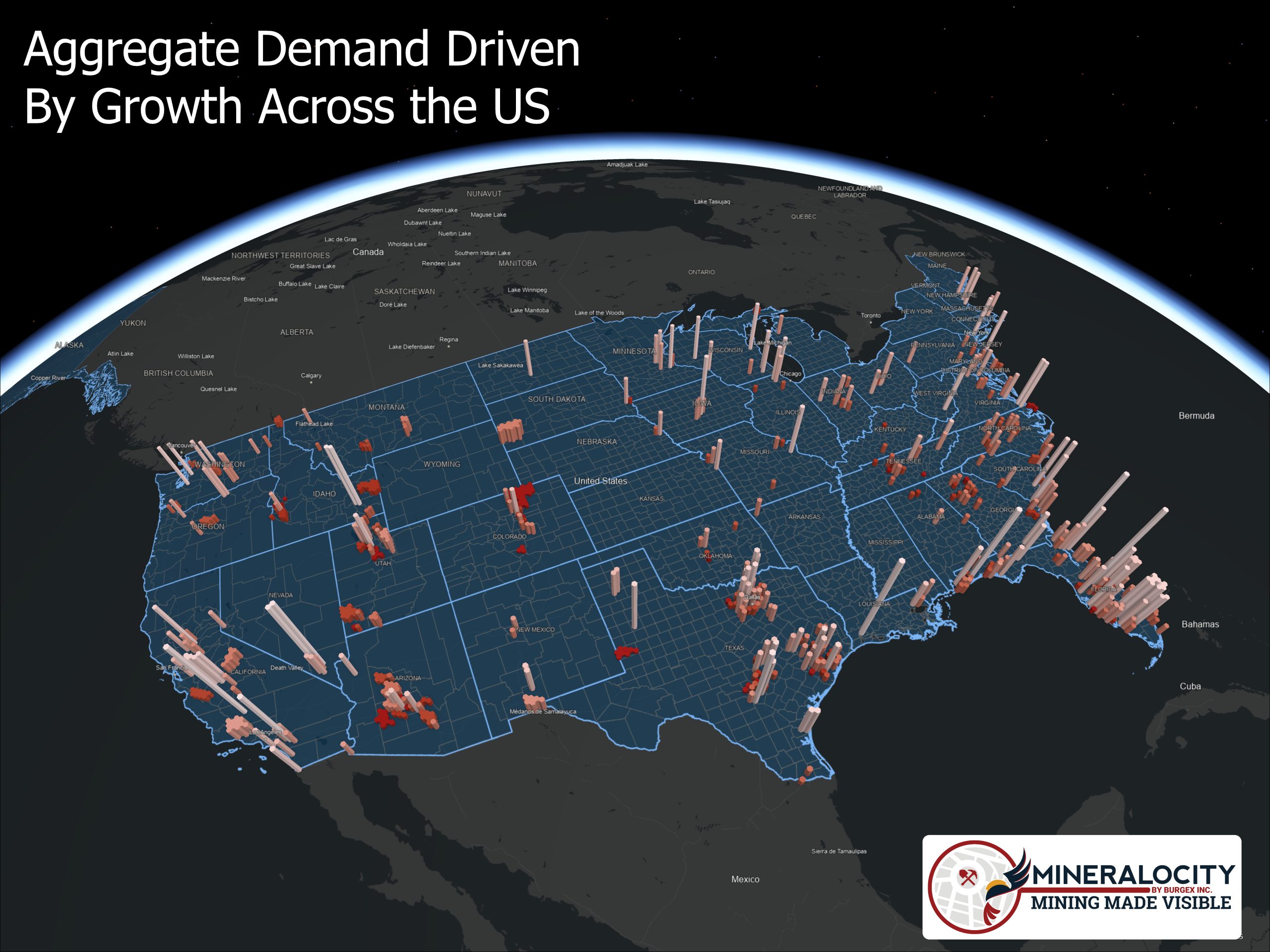
To understand the future of the nation's infrastructure, and to make sense of the demand hotspots highlighted in our accompanying Market Heatmaps, we must look at the specific economic engines driving development across these key markets.
1. The Texas Triangle & Desert Southwest: The Kings of Horizontal Sprawl
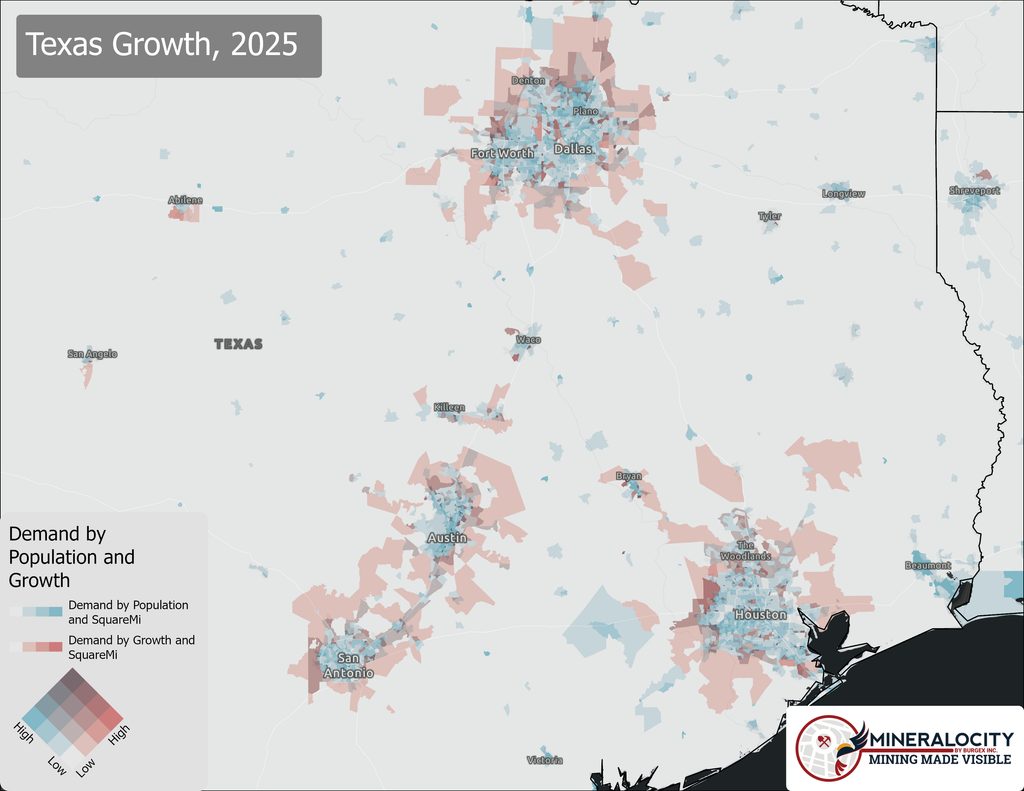
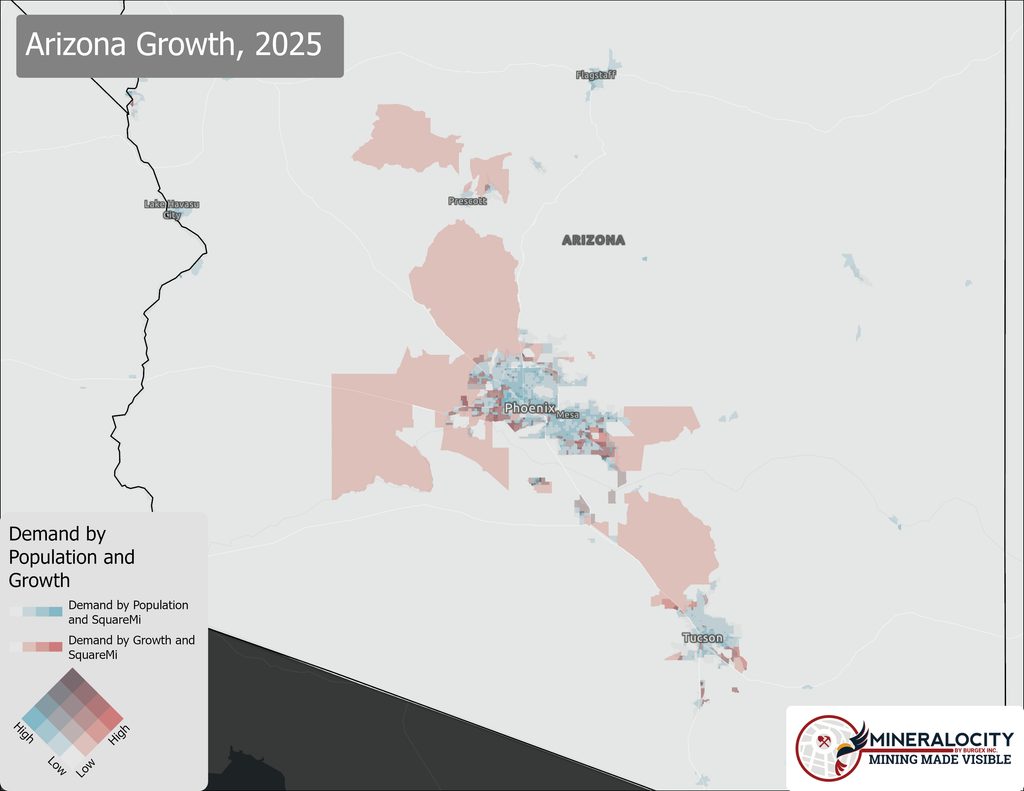
Markets like Dallas-Fort Worth, Houston, San Antonio, and Phoenix represent some of the strongest areas of horizontal growth in the United States. Demand here is being driven by population growth, housing affordability, and corporate decentralization.
Special Financing & The Master-Planned Sprawl:
In Texas and Arizona, private developers frequently utilize special financing districts, such as Municipal Utility Districts, to help support the infrastructure needed for large-scale horizontal development.
• The Projects: In Buckeye, Arizona, Howard Hughes Communities is developing Teravalis, a 37,000-acre master-planned community projected to include up to 113,000 homes at full build-out. In north Dallas, communities like Prosper and Celina are seeing similarly large development footprints.
• The Heavy Civil Reality: A single master-planned community requires immense volumes of crushed stone for localized roads, curbs, stormwater detention basins, and sewer trenching long before a single residential foundation is poured.
The Exurban Arterial Catch-up:
As development continues moving beyond the urban core and into exurban tollway rings, commuter traffic patterns are placing increasing pressure on roads that were recently serving much smaller populations.
• The Projects: The Dallas North Tollway Phase 4/5 extensions and the widening of US-380 in Collin County reflect this exurban growth. In Phoenix, the expansion of the Loop 303 corridor serves a similar purpose.
The Geologic Friction of the Coastal Plain
• The Reality: Houston has virtually no native hard rock. Supplying growing subdivisions and major infrastructure projects such as the Grand Parkway (TX-99) outer loop requires significant volumes of limestone to be railed in from the Balcones Fault in Central Texas or barged along the coast, making transportation and terminal capacity important considerations for regional growth.
2. The Carolina Piedmont & Florida: White-Collar Boom to Lifestyle Arbitrage
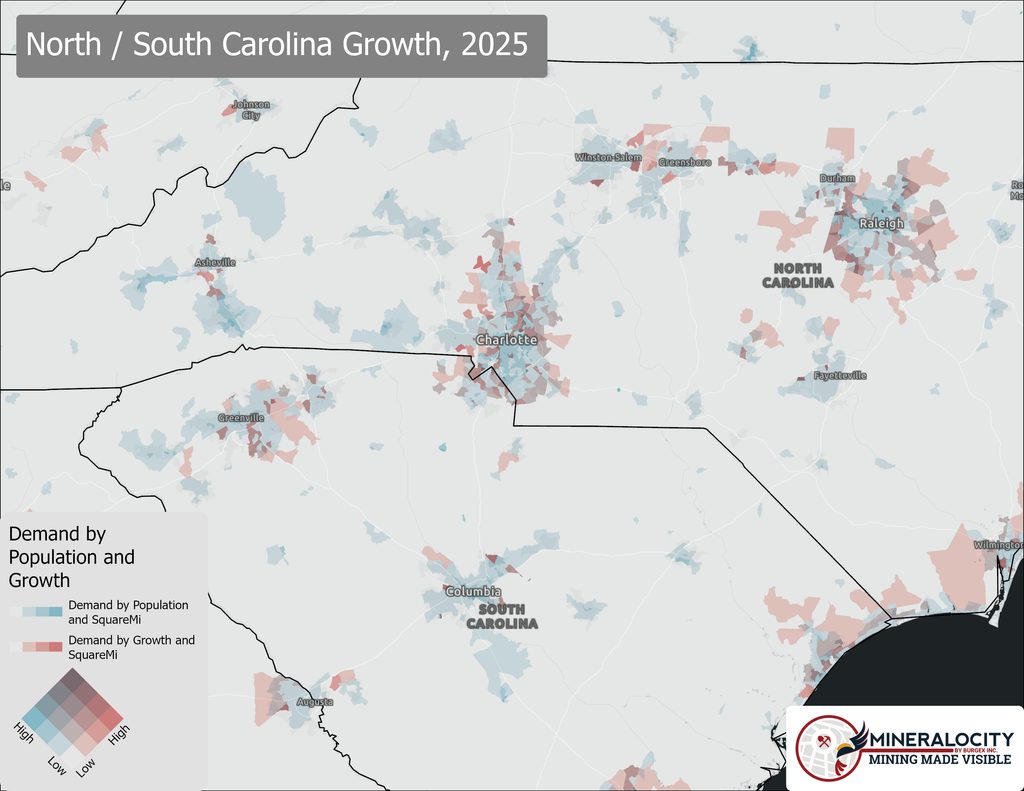
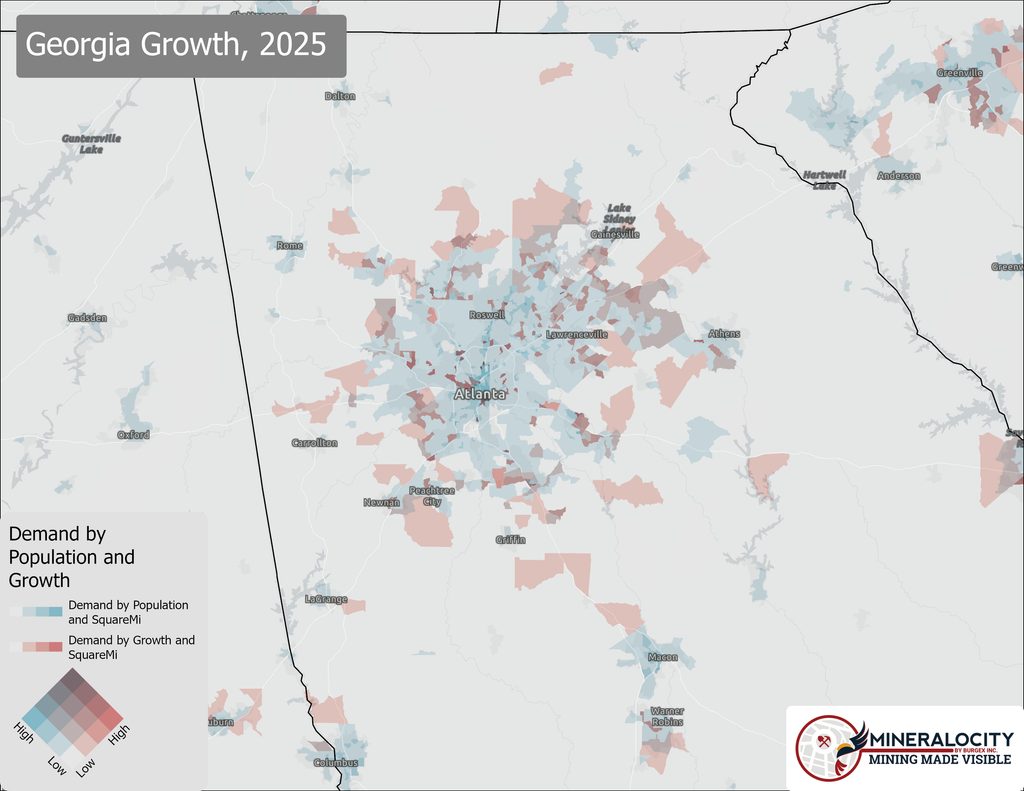
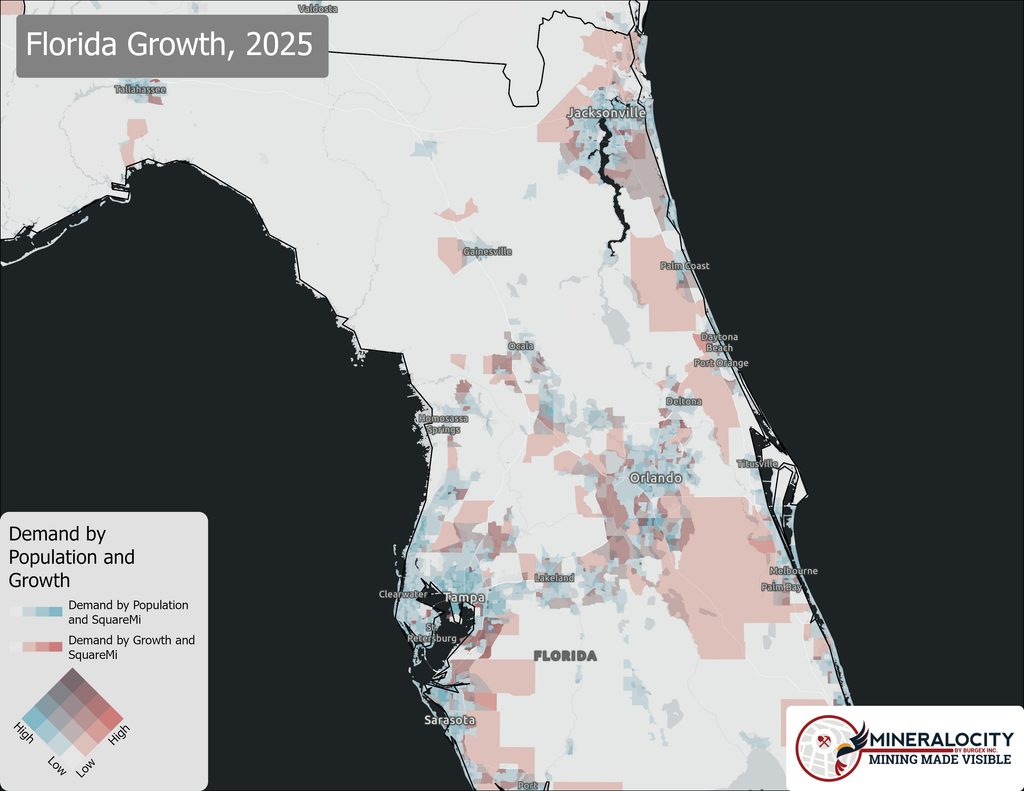
Charlotte, Raleigh, Atlanta, and Florida's coastal and I-4 corridors, including Tampa, Orlando, and Jacksonville, are absorbing different demographics. Tech and finance talent are contributing to growth in the Carolinas and Atlanta, while population growth continues across Florida. Both are generating significant localized aggregate consumption.
The "New Economy" High-Density Pivot (Carolinas & Atlanta):
University pipelines and corporate tech and fintech investment are contributing to dense, mixed-use commercial development alongside traditional subdivisions.
• The Projects: Developments like Ballantyne Reimagined in Charlotte or the Research Triangle Hub in Raleigh require deep mid-rise concrete foundations, structural parking decks, and extensive concrete flatwork.
The Data Center Footprint
• The Reality: Hyperscale technology facilities add another layer of localized construction demand. These structures can require specialized, vibration-resistant concrete foundations and significant volumes of concrete, creating additional demand for high-specification sand and gravel within these markets.
The Logistics Disconnect (Florida)
• The Reality: Florida’s native limestone is well suited for structural fill and base material, but its higher absorption can limit its use in certain DOT-grade asphalt applications. Those applications can require lower-absorption, polish-resistant aggregate transported into the state by rail, increasing the importance of rail-served distribution terminals.
The Infrastructure and Supply-Chain Response
• The Reality: Florida’s Moving Florida Forward initiative is accelerating major transportation projects alongside FDOT’s broader work program, with more than $66.1 billion in transportation investment planned over five years. At the same time, the state’s Construction Aggregate Program can provide up to $20 million annually for seaport and rail projects that expand aggregate storage capacity. Recent investments have targeted more than 4.2 million tons of additional storage, showing how material distribution itself is becoming a critical part of supporting Florida’s infrastructure pipeline.
3. The Mountain West: Expanding the Constrained Valley & The Tech-Manufacturing Boom
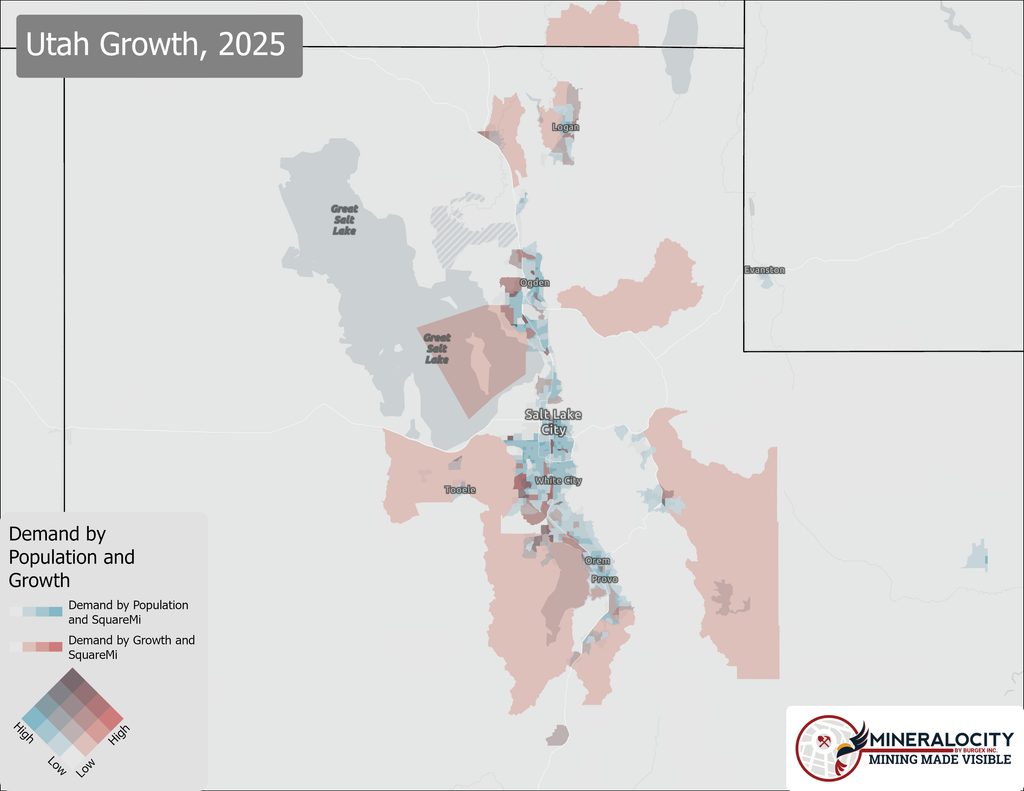
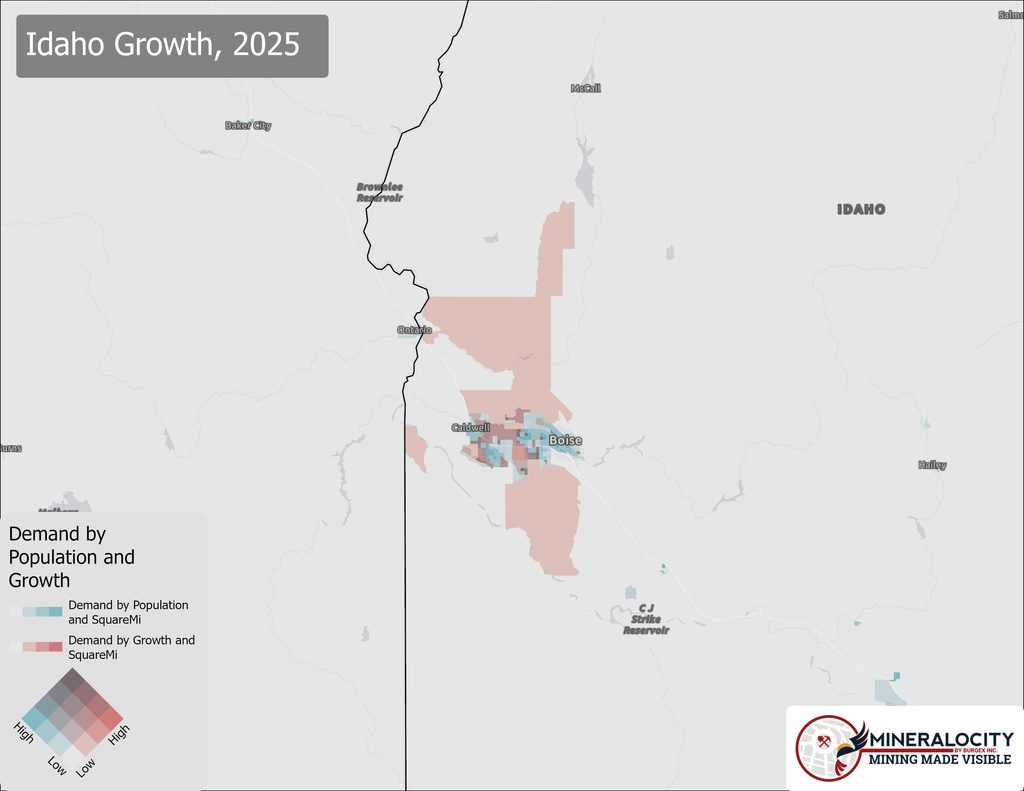
Salt Lake City and Boise have evolved from remote-work destinations into growing technology and manufacturing markets. While population growth remains an important driver, it is increasingly being accompanied by significant localized industrial investment.
The Tech-Manufacturing Mega-Project
• The Projects: Boise is currently absorbing the impact of Micron Technology's semiconductor expansion. Micron broke ground in late 2022 on a $15 billion advanced memory manufacturing fab in Boise, marking the first new memory manufacturing fab built in the U.S. in 20 years. Cleanroom space is expected to come online in phases starting in 2025.
• The Heavy Civil Reality: The project represents a significant concentration of construction-material demand. Beyond the requirements of the fab itself, the project can bring additional workers and supporting businesses into the Treasure Valley, contributing to further housing and infrastructure demand.
Topographical Bottlenecks
• The Reality: Unlike the 360-degree sprawl of Dallas, Mountain West cities are geographically constrained by valley floors. As residential development pushes against the foothills, projects can require complex heavy-civil excavation, bedrock removal, retaining wall systems, and steep road grades that add to construction-material requirements.
The "Capacity Debt" and Highway Expansion
• The Projects: The rapid influx of residential and industrial traffic has placed increasing pressure on existing north-south routes. This is contributing to continued transportation investment, including projects such as the recently completed 16-mile, four-lane West Davis Highway in Utah and the Highway 16 extension in Idaho's Ada and Canyon counties, designed to help alleviate valley-floor congestion.
4. The Heartland Industrial Revival: Paving the Gigafactory
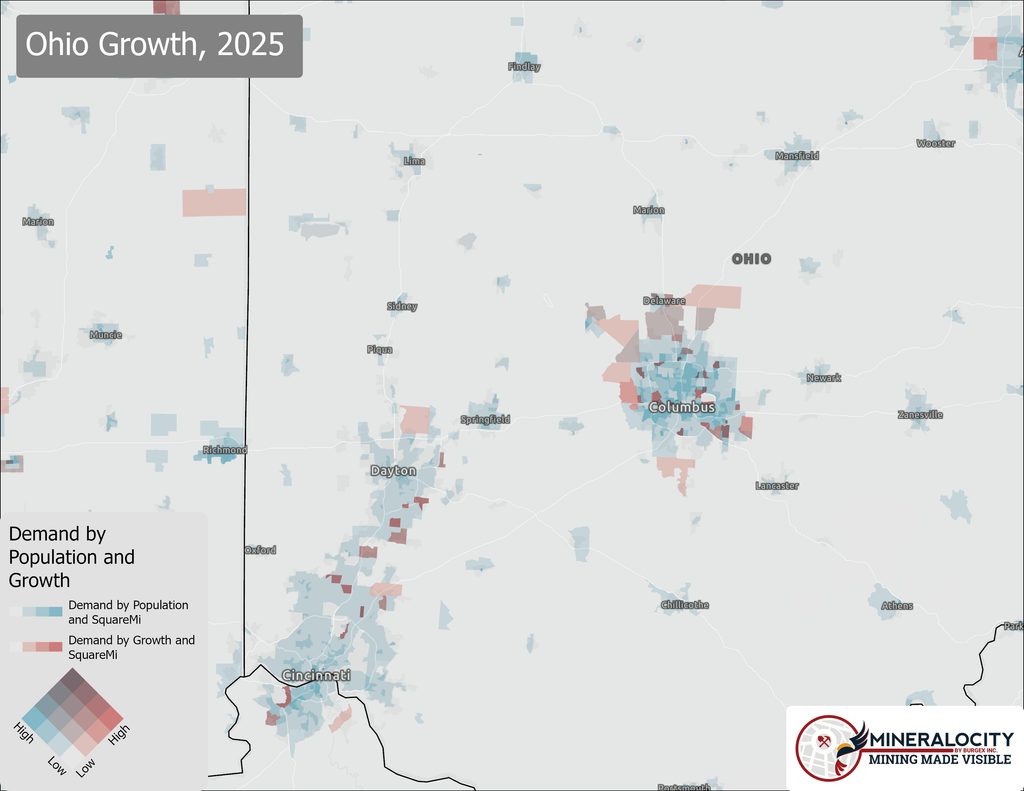
Central Ohio, Indiana, and South Carolina, including Columbus, Indianapolis, and Greenville, demonstrate why population growth alone doesn't tell the whole demand story. These regions are experiencing significant industrial and supply-chain investment that can create concentrated material demand independent of major demographic shifts.
The State-Backed Mega-Site
• The Projects: In Boone County, Indiana, the state has developed the LEAP Innovation District as a major industrial hub. The area is attracting significant capital investment, including Eli Lilly's announced $4.5 billion investment across its Lebanon manufacturing sites. In Ohio, Intel is developing a $20 billion semiconductor manufacturing campus in New Albany.
Mega-Site Foundations & Utility Trenching
• The Heavy Civil Reality: Semiconductor fabs, pharmaceutical API plants, and other major industrial facilities can require specialized concrete foundations along with extensive water, cooling, and utility infrastructure. These projects can create highly localized demand for coarse aggregate, bedding materials, and backfill.
Heavy-Haul Logistics Grids
• The Reality: Supporting these industrial nodes can also require expanded rail-served distribution yards, roads, and high-strength paved areas for large manufacturing, logistics, and warehousing facilities, creating additional heavy civil demand across the surrounding market.
5. The California Exodus & Exurban Infill: Sacramento and the Inland Empire
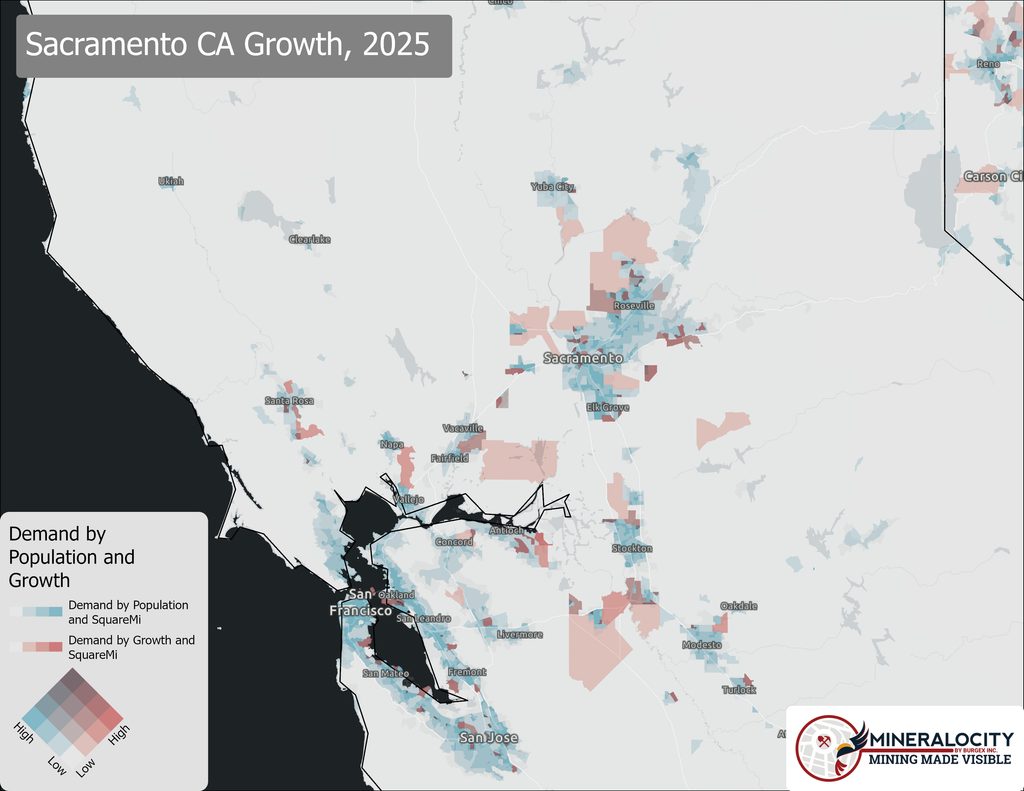
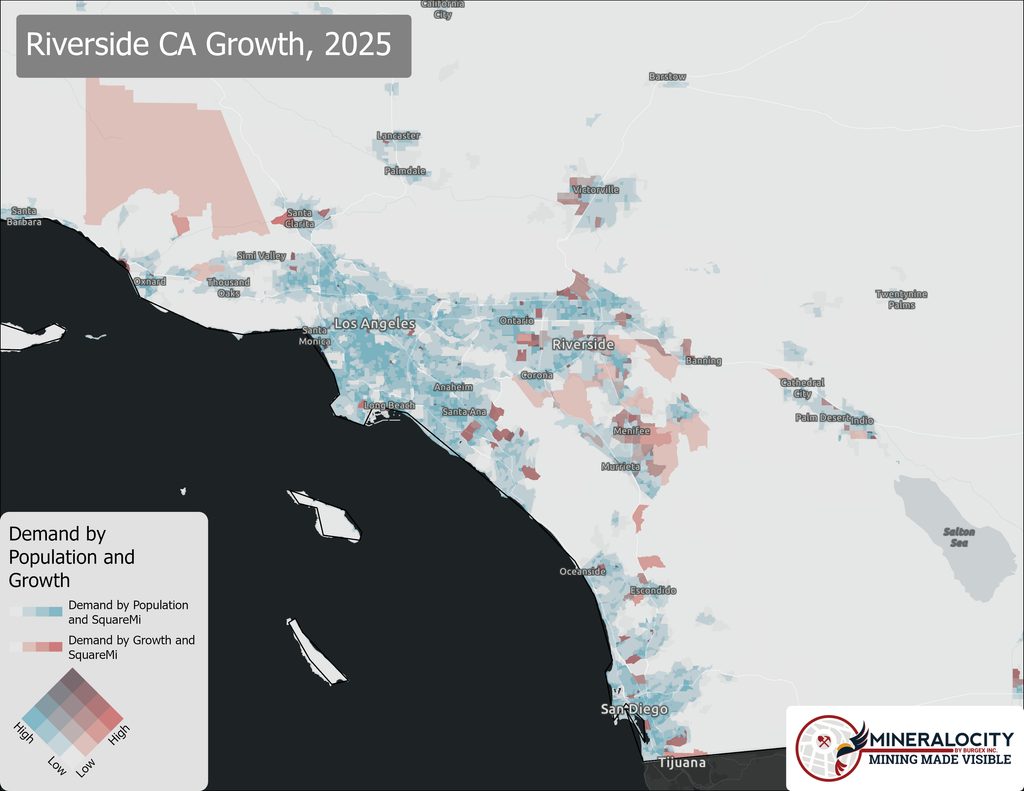
California markets like Sacramento and Riverside (the Inland Empire) present a different growth pattern: intra-state migration combined with highly localized industrial development. Rather than primarily absorbing out-of-state residents, these regions are also being shaped by population and development shifting away from more expensive coastal metros.
The Intra-State Affordability Escape (Sacramento):
Driven in part by demographic movement away from the San Francisco Bay Area, Sacramento continues to see new residential and institutional development.
• The Projects: Sacramento County planners are advancing the Upper Westside Specific Plan, a master-planned community spanning more than 2,000 acres that proposes more than 9,300 new housing units.
The Logistics Backbone (Riverside / Inland Empire):
The Inland Empire has long served as Southern California's logistics backbone. Continued e-commerce and import activity from nearby coastal ports has contributed to warehouse projects, distribution centers, and rail-adjacent industrial development.
• The Heavy Civil Reality: The volume of industrial real estate development requires significant quantities of aggregate for concrete construction, expansive foundation slabs, paved areas, and heavy-haul truck staging.
The Permitting Supply Constraint
• The Reality: One of the fundamental challenges in California is permitting. While residential, infrastructure, and logistics development continues to generate aggregate demand, local opposition and stringent environmental reviews can make permitting new aggregate quarries difficult. When new sources cannot be easily developed near growing markets, haul distances from existing quarries can increase, adding freight costs to delivered material.
Conclusion: Correlating Demand with the Map
The economic shifts driving construction across the United States are not a singular, uniform wave. From residential growth in the Texas Triangle to industrial investment across the Heartland, heavy civil material demand is being powered by distinct, localized economic engines.
For aggregate producers, infrastructure investors, and logistics firms, macro-level statewide demographic trends only tell part of the story. As the accompanying Market Heatmaps demonstrate, understanding market potential requires looking at how specific demand drivers, such as industrial investment, master-planned development, and transportation expansion, interact with local population and growth patterns.
By connecting the ‘why’ behind these economic engines with the ‘where’ of spatial data, we can build a clearer picture of where future aggregate demand may be emerging and where local supply chains could face increasing pressure.
Editorial Note: AI-assisted tools were used to support the research and editing of this article. All final content and analysis were reviewed by the authors.